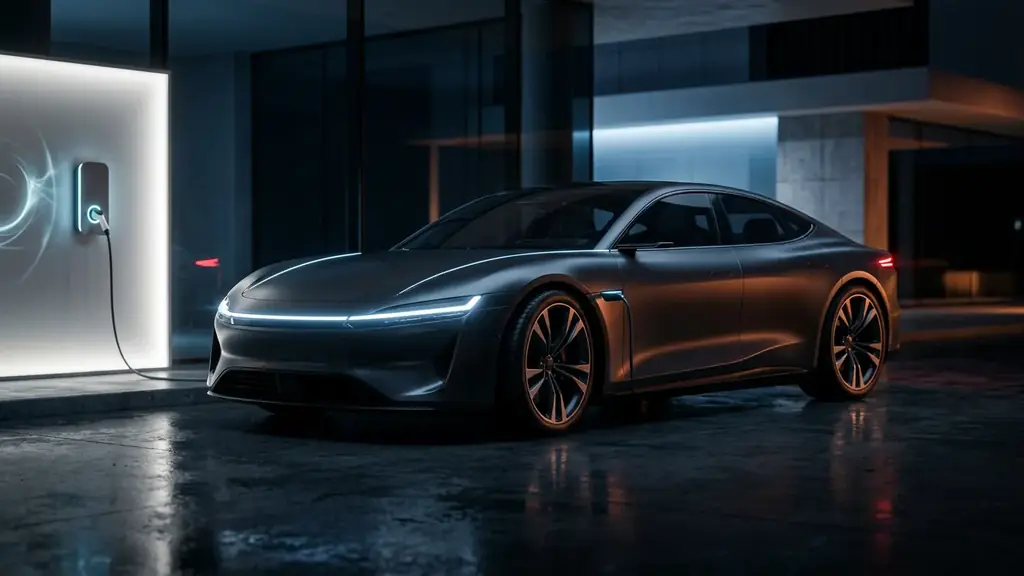
Electric performance cars: the buying guide
Instant torque, silent running and zero CO2 penalty (malus). A rundown of electric sports cars and GTs, their key criteria and their favourable registration cost.
Performance goes electric
Torque available from the very first turn of the wheels, acceleration that rivals combustion supercars, a centre of gravity lowered by the battery: the electric sports car is no longer a curiosity, it is a category in its own right. Electric GTs offer, on top of that, unprecedented refinement and quiet running.
Beyond the sensations, the case is also financial: in France, electric cars escape the CO2 penalty (malus) and often benefit from advantages on the carte grise. On Luxydrive, these models are curated to our luxury eligibility criteria, with complete specifications and a price floor.
The criteria to check
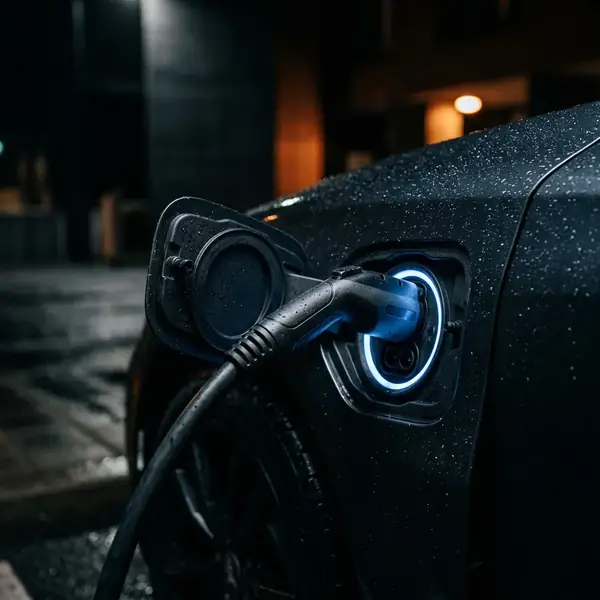
Electric shifts the points of attention towards the battery and charging:
- Battery state of health (SOH): the number-one criterion; ask for a recent diagnostic.
- Battery warranty: check the remaining duration and mileage, often transferable.
- Real-world range: distinguish the official figure from the range observed in actual use.
- Charging power: DC (direct current) capability and compatibility, decisive for long journeys.
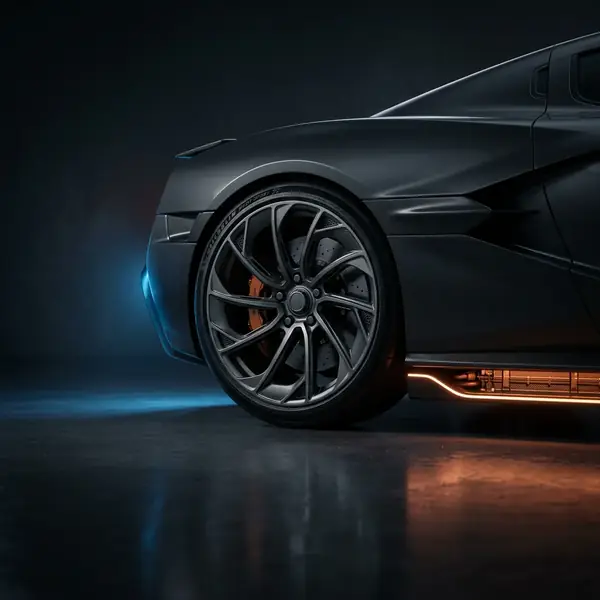
- Weight: high, it wears tyres and brakes faster — check their condition.
- Software history and VIN: updates, any recalls; free vPIC decoding on Luxydrive.
Iconic models
The benchmarks of electrified performance, from roadster to grand GT:
- Porsche Taycan (Turbo / GTS) — the dynamic benchmark, with a top-flight chassis.
- Tesla Model S Plaid — extraordinary acceleration and a generous range.
- Audi RS e-tron GT — technology and finish at their peak, sharing its base with the Taycan.
- Maserati GranTurismo Folgore — Italian grand touring gone electric.
- Lotus Emeya / Eletre — the British vision of the high-performance electric GT and SUV.
- Polestar 2 / 3 — Scandinavian design and measured sportiness.
- Hyundai Ioniq 5 N — the playful electric sports car, with ultra-fast charging.
- BMW i4 M50 — the electric coupé saloon, dynamic and accessible.
Budget & registration cost
This is where electric takes the advantage. In France:
- CO2 penalty (malus): zero, since the vehicle emits no CO2 at the tailpipe — a major saving versus an equivalent combustion sports car.
- Registration certificate (carte grise): many regions apply a full or partial exemption to electric vehicles (the rate depends on your region).
On Luxydrive, every listing shows the multi-country registration cost with the exact France calculation (malus + regional carte grise), which clearly highlights the electric advantage. The public fiscal horsepower calculator remains useful for estimating the administrative power rating. On the ownership side, factor in charging costs (home vs. rapid chargers) and insurance; mechanical maintenance costs, by contrast, are generally lower.
FAQ
Yes. In France, a fully electric vehicle emits no CO2 at the tailpipe and is therefore not subject to the ecological penalty (malus). It is often a very substantial saving compared with a combustion sports car of comparable power, as the registration cost shown on every Luxydrive listing makes clear.
Ask for a recent state-of-health (SOH) diagnostic and check the remaining battery warranty (duration and mileage). These are the decisive criteria for a used electric sports car: a healthy battery still under warranty protects the vehicle's value over the long term.